Therapy for Children During Divorce: What Parents Need to Know
By Lauren Watson, LPC, LCMHC
Divorce can quietly reshape a child’s world in ways that are not always obvious at first. Changes in routines, homes, and emotional dynamics often accumulate over time, leaving children feeling unsettled, conflicted, or unsure where they belong.
Therapy can be a powerful support for children during divorce—but only when it is protected as a stable, child-centered space, separate from adult conflict and legal processes.
Below are key principles that help therapy remain effective, ethical, and genuinely supportive for children navigating life across two homes.

Why Trust Is Essential in Child Therapy During Divorce
At its core, therapy works because of trust:
Trust between the child and therapist
Trust between parents and the therapeutic process
Trust that therapy will remain emotionally safe and predictable
When therapy becomes entangled in parental conflict—especially legal disputes—that trust can erode quickly. Children are deeply sensitive to divided loyalties. Even subtle pressure to align with one parent can lead them to shut down, withhold information, or feel responsible for managing adult emotions.
A child therapist’s role is not to determine fault, validate one parent over another, or uncover “the truth.”
The role is to support the child’s emotional regulation, development, and sense of safety during a major life transition.
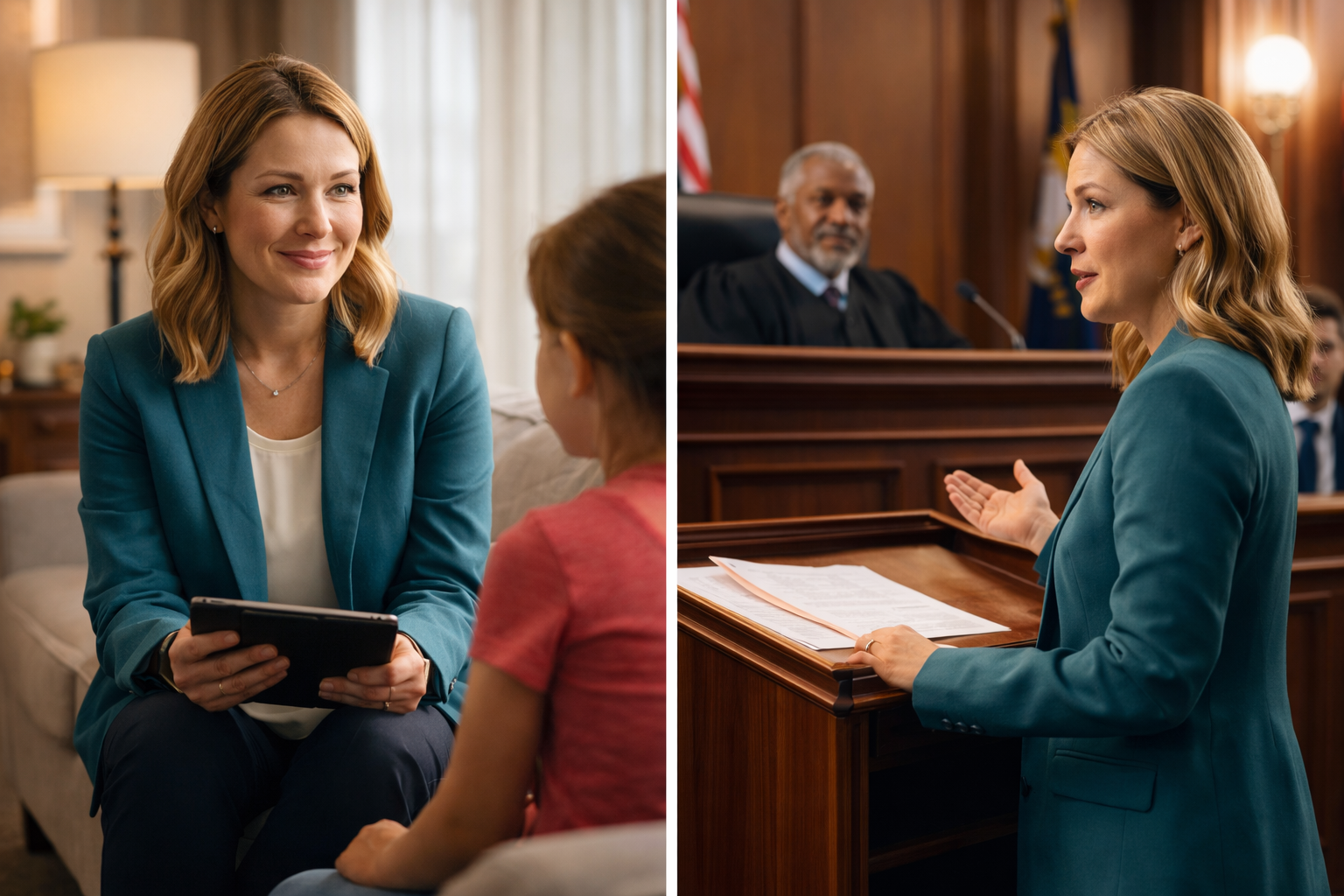
Why Therapists Should Stay Out of Custody Disputes and Court
Child therapy is not designed to function as evidence, testimony, or leverage in custody cases. When therapists are pulled into legal dynamics, several risks arise:
Children may become less open, fearing their words could be repeated or used
Therapy can shift from healing to self-protection
The therapeutic relationship may be compromised, sometimes permanently
From both an ethical and clinical standpoint, therapy is most effective when it remains confidential, developmentally appropriate, and outside of legal agendas.
If a family needs professional input for court—such as assessments, investigations, or custody recommendations—a guardian ad litem (GAL) or custody evaluator is usually the more appropriate resource. These roles are specifically designed to interface with the legal system, allowing therapy to remain what it is meant to be: a protected space focused on the child’s emotional well-being.
Supporting a Child Living in Two Homes
After separation or divorce, children often move between two very different emotional ecosystems. Each household may have its own routines, expectations, and emotional tone.
Therapy does not require both homes to operate the same way. Instead, effective child therapy during divorce focuses on helping children:
Understand and adapt to different environments
Build emotional flexibility and internal stability
Feel safe expressing their experience without having to “choose sides”
Rather than evaluating which household is right or wrong, therapy supports children through the adjustment process while strengthening skills that travel with them wherever they are.

What Parents Share in Therapy—and Why Boundaries Matter
Parents often feel a strong need to explain the other parent’s behavior or history, especially during emotionally charged separations. This impulse is understandable. However, in child therapy, clear boundaries are essential.
Information about the other parent is relevant only when it directly impacts the child’s experience, such as:
Changes in routines or caregiving
Shifts in emotional availability
Stressors the child is reacting to
The therapist’s role is not to take sides, defend one parent, or challenge another parent’s narrative. The therapist’s role is to listen to each parent’s experience within their own household and context, while keeping the focus on how the child is navigating that environment.
Therapy is not a forum for determining whose version of events is correct. It is a space for understanding how a child experiences their world—and what support they need to grow within it.
Consistency Helps Children Heal During Divorce
Children benefit most when therapy feels like a consistent anchor, even as their external world changes. That consistency comes from:
Clear therapeutic boundaries
Predictable structure
A shared understanding that therapy belongs to the child—not the conflict
When parents allow therapy to remain child-centered, children are better able to process grief, confusion, loyalty conflicts, and adjustment stress in healthy, developmentally appropriate ways.
A Final Thought for Parents Considering Therapy During Divorce
Divorce is fundamentally a transition.
Child therapy during divorce is not about fixing families or validating adult narratives. It is about helping children feel safe enough to grow within new realities.
When parents protect therapy as a neutral, stable space—and use other appropriate professionals when legal clarity is needed—children gain something invaluable:
A place where they do not have to manage anyone else’s agenda, only their own experience.