Summer Isn’t a Break From Social Development: How Parents Can Use Summer to Build Social Confidence
by Lauren Watson, LPC
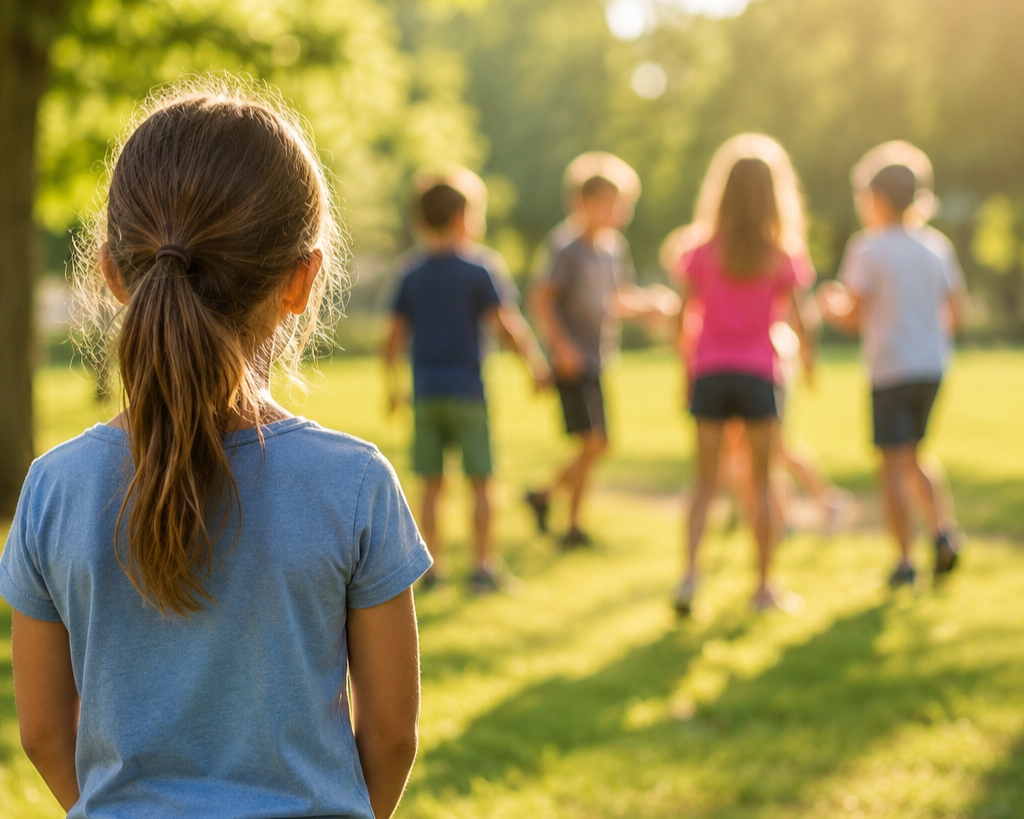
This image represents social skills development, friendship building, social confidence, peer relationships, and helping children with ADHD, anxiety, autism, or social difficulties connect with others during summer break.
For many children, summer is a welcome break from academics. But for children who struggle socially, summer can become either a powerful opportunity for growth—or a season of avoidance that leaves them feeling even more disconnected when school resumes.
Children don’t develop social skills by reading about friendship. They develop them through repeated experiences of connection, repair, problem-solving, discomfort, and practice. Summer provides something that the school year often does not: the time and flexibility to intentionally scaffold these experiences.
The goal is not to create a summer packed with forced social activities. Instead, think of summer as a chance to create a series of manageable social challenges that help your child build confidence one step at a time.
This post is meant to be a broad strokes guide. If social skills, friendships, confidence, or peer relationships are areas your family is actively working on but you are struggling with the nuance, summer can be an excellent time to engage in therapy. With fewer academic demands and more opportunities for real-world practice, children often have the space to build skills, gain insight, and experiment with new ways of connecting with others.
In addition to individual therapy, we’re excited to be bringing our Social Development Groups to Richmond this fall after years of success in Northern Virginia. These small, therapist-led groups are designed for children and teens who would benefit from support with friendship building, conversation flow, group dynamics, social confidence, flexibility, and navigating the increasingly complex social landscape of childhood and adolescence.
Groups will be thoughtfully matched by age and social goals, with an emphasis on authentic connection, skill-building, and real-world application—not simply learning social rules.
Interested in learning more or joining our interest list? Complete our brief interest form here:
We anticipate limited spots and will use interest forms to help create the best group fit for each participant.
First: Identify What Social Skill Actually Needs Practice
Parents often tell us, “My child needs to work on social skills.”
But social skills are not one thing.
A child might struggle with:
Starting conversations
Joining groups already engaged in play
Reading social cues
Flexibility when plans change
Managing disappointment
Taking turns in conversation
Handling teasing
Recovering from mistakes
Regulating emotions during play
Maintaining friendships over time
Before creating goals, ask:
What specifically gets in my child’s way socially?
The answer becomes your summer target.
Goal #1: Increase Social Exposure
Many children who struggle socially unintentionally become isolated during summer.
A good first goal is simply:
Practice being around peers consistently.
Concrete Steps
Attend one structured social activity each week.
Schedule one playdate every 1–2 weeks.
Participate in camps, clubs, sports, library events, or community programs.
Visit playgrounds regularly rather than staying home.
The focus is not on making best friends.
The focus is repetition.
Social confidence grows from familiarity.
Goal #2: Help Your Child Learn How to Start Conversations and Make Friends
One of the most common concerns parents share is:
“My child wants friends but doesn’t know how to approach other kids.”
Learning how to start conversations is a foundational social skill for children. Many kids with ADHD, anxiety, autism, or executive functioning challenges may wait for others to initiate interactions, even when they desperately want connection.
Summer Social Skills Practice
Week 1:
Say hello to one peer.
Week 2:
Ask another child a simple question.
Week 3:
Invite someone to join an activity.
Week 4:
Introduce yourself independently.
Helpful conversation starters include:
“Can I play too?”
“What are you building?”
“Do you want to play tag?”
“What do you like to do for fun?”
Practicing these phrases at home can significantly increase a child’s confidence when interacting with peers.
Goal #3: Improve Flexibility During Social Situations
Many friendship challenges occur not because a child lacks kindness, but because they struggle when things don’t go according to plan.
Children may become upset when:
A friend wants to play something different.
Rules change unexpectedly.
They don’t get the role they wanted.
Someone disagrees with their idea.
Helping children develop cognitive flexibility is one of the most effective ways to improve social success.
How Parents Can Help
Create a weekly “Flexible Thinking Challenge.”
When plans change, ask:
“What’s another solution?”
“What’s your backup plan?”
“Can two ideas be true at the same time?”
Children who can tolerate small disappointments often find it much easier to maintain friendships.
Goal #4: Teach Conversation Skills That Support Friendship
Many children know how to talk but struggle with the back-and-forth rhythm of conversation.
They may:
Talk only about their interests.
Forget to ask questions.
Give very short answers.
Interrupt frequently.
These are common social communication challenges, particularly for children with ADHD and autism.
A Simple Strategy: Share Two, Ask One
Teach children to:
Share two pieces of information.
Ask one question.
Example:
“I got a new bike.”
“I rode it to the park yesterday.”
“What do you like to do outside?”
This structure helps conversations feel more balanced and enjoyable for both children.
Goal #5: Help Kids Learn to Handle Social Mistakes
One of the most overlooked social skills for children is learning how to recover after a mistake.
Friendships are not built on perfection.
They are built on repair.
Children benefit from learning phrases such as:
“Sorry about that.”
“I didn’t mean it that way.”
“Can we try again?”
“What can I do differently next time?”
Kids who learn repair skills tend to build stronger and longer-lasting friendships.
Goal #6: Strengthen Social Awareness and Reading Social Cues
Reading social cues is a skill that develops over time.
Some children have difficulty recognizing when peers are:
Interested
Bored
Frustrated
Excited
Uncomfortable
Parents can build social awareness naturally throughout summer.
Practice at Home
While watching television, movies, or reading books together, ask:
“How do you think that character feels?”
“What clues helped you figure that out?”
“What do you think they might do next?”
This strengthens perspective-taking and emotional awareness in a low-pressure environment.
Goal #7: Teach Friendship Maintenance Skills
Making friends is only part of the equation.
Children also need to learn how to maintain friendships over time.
Summer is an excellent opportunity to practice:
Reaching out to peers
Scheduling playdates
Sending texts to friends
Following up after activities
Showing interest in others
Many children assume friendships should happen automatically. In reality, healthy friendships require intentional effort and follow-through.
Goal #8: Build Social Confidence Through Manageable Challenges
Children develop confidence by doing hard things—not by avoiding them.
Many children avoid social situations because they feel nervous about:
Joining groups
Starting conversations
Meeting new people
Attending camps
Participating in activities independently
Confidence grows when children experience success after manageable challenges.
Parents can ask:
“What’s one social challenge that feels a little uncomfortable but still doable?”
That question often identifies the perfect growth opportunity.
For children with anxiety, ADHD, or social difficulties, progress usually comes from repeated small successes rather than one big breakthrough.
Why Summer Is the Best Time to Build Social Skills
The school year often moves too quickly for intentional social coaching.
Summer provides the opportunity to slow down and focus on skills such as:
Making friends
Starting conversations
Reading social cues
Managing disappointment
Flexible thinking
Friendship maintenance
Social confidence
The goal isn’t to create a perfect social butterfly.
The goal is to help your child become more comfortable, capable, and confident in relationships.
Small, consistent practice throughout the summer can create meaningful gains that carry into the next school year and beyond.