— Lauren Watson, LPC, LMHC
A few LEGO figures, a phone, and a story about a dinosaur who refuses to go to bed. That might be all you need for an afternoon of making something together.
The app Stop Motion Studio lets you turn a series of photos into a short movie. You take a picture, move a toy a little, and take another picture. When the pictures play in order, the toy looks like it’s moving.
Kids get to bring their ideas to life, and you get to be part of the process. Along the way, there are opportunities to practice waiting, thinking ahead, and working through small frustrations. But what I love most about this activity is the chance to slow down and really pay attention to your child—their ideas, their humor, and the stories they want to tell.
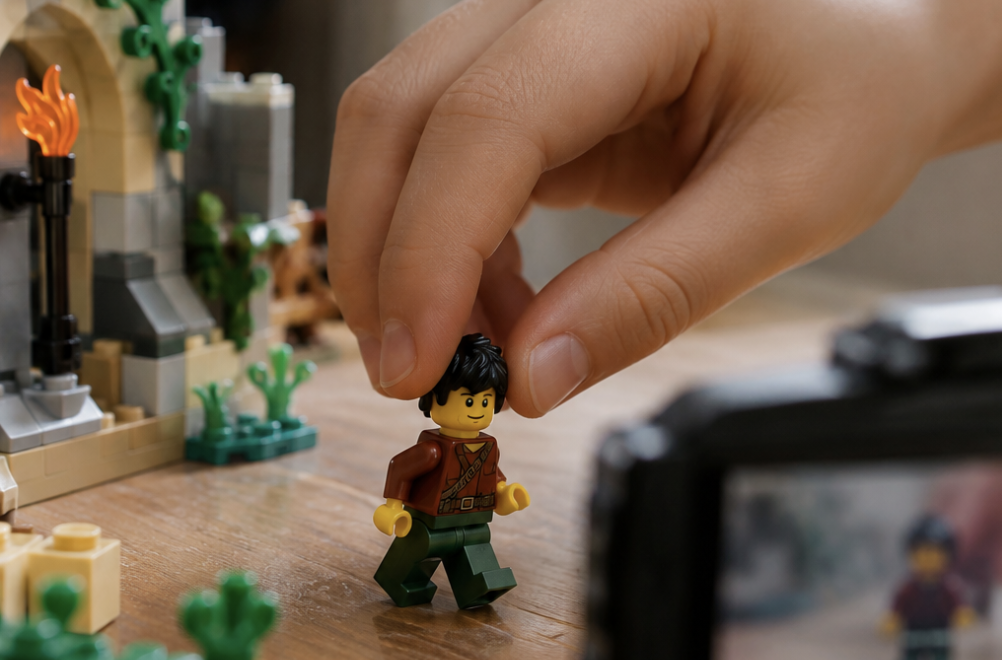
Making a stop-motion movie together gives you time to follow your child’s imagination, one frame at a time.
What Is Stop-Motion Animation?
Stop-motion animation turns a series of still pictures into a moving story. You take a photo, move an object slightly, and take another photo. Play the pictures in order, and the object appears to move.
The app Stop Motion Studio lets you put those pictures together into a movie. You can start with a phone or tablet, a steady place to prop it, and a few toys, LEGO figures, or pieces of clay.
Your first movie can be as simple as a figure walking across the table. A few seconds of animation are enough to see your child’s idea come to life.
Practicing Impulse Control: Pause Before the Next Move
Making a stop-motion movie has a rhythm:
Move the toy. Pull your hand away. Pause. Take the picture. Decide what happens next.
That rhythm gives children a natural reason to slow down. They may want to move a character straight to the finish, but making it look like it’s walking takes several small movements.
This is an opportunity to practice impulse control—in simple terms, giving yourself a moment before acting.
You can support that pause with a quick question:
“Where do you want him to go next?”
“Are our hands out of the picture?”
“Want to watch this part before we keep going?”
Keep your tone curious and relaxed. The pause helps them make the movie they want to make. It doesn’t need to become a running lesson about patience.
An afternoon of animation won’t automatically make waiting easier in every situation. It does offer a playful place to practice.
Building Planning Skills: How Do We Get There?
Your child might know exactly how the movie should end: the dragon wakes up, the dinosaur escapes, or everyone falls into a giant pile. Getting there means figuring out a few steps along the way.
Planning means thinking about what you want to happen and what you need to do next.
You can help your child connect each small movement to their bigger idea:
“What do you want to happen in this scene?”
“What needs to happen first?”
“If she’s going to hide, where should we move her next?”
Watching the pictures back also gives them a chance to check their plan. Did the character move the way they imagined? Do they want to change something? They’re practicing how to try an idea, see what happens, and adjust. And if the plot changes halfway through, that can be part of the fun.
Connecting Through Your Child’s Stories
This is the part I’d encourage parents to linger with.
As you make the movie, notice how your child shares their ideas. Do they talk through every detail? Make sound effects? Move the characters around before they know what will happen? Do they want your suggestions, or do they mostly want you to watch?
You’re learning something about how they express themselves—and how to join them.
You may also notice themes in their stories. Perhaps someone keeps getting left out. A small character becomes powerful. A misunderstood creature finally finds a friend. Or every scene ends with an elaborate, hilarious disaster. Be curious without assuming you know what it means. Children borrow from movies, games, everyday experiences, and their own imagination. A story isn’t a code you need to crack.
You might say:
“He keeps trying to get their attention.”
“She really wants to make her own choice.”
“Tell me about that part.”
Then leave space. Your child may explain, correct you, or keep moving the figures. All of those responses are welcome.
You don’t need to turn the story into a serious conversation for it to become a moment of connection. Laughing at the same scene, remembering a character’s name, or noticing a detail can show your child that you’re interested in their world.
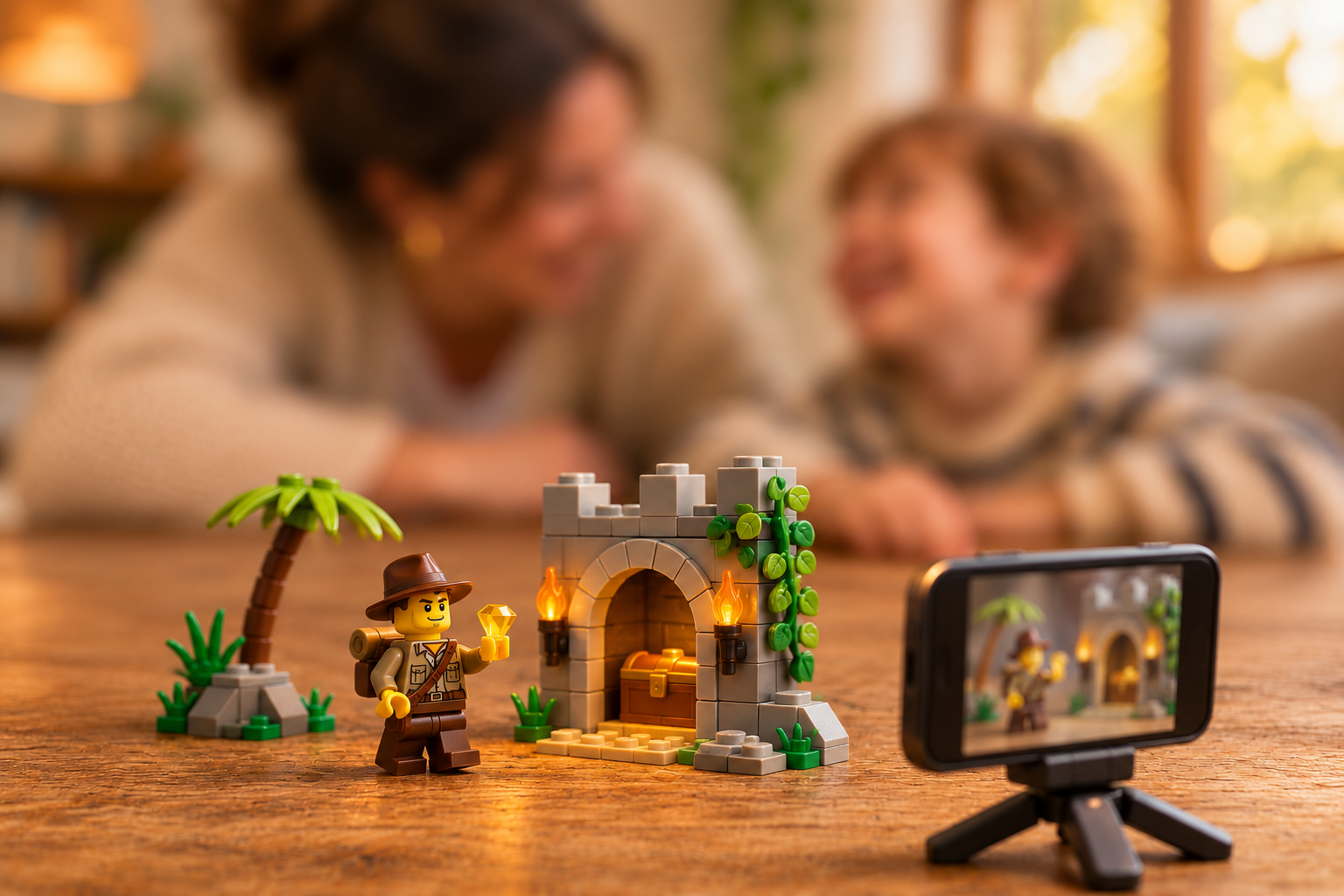
Let Your Child Be the Director
It’s easy to get involved and start improving things. You straighten the set, suggest a different ending, or explain how to make the movement smoother. Before stepping in, ask what job your child wants you to do.
You might hold the phone, build a doorway, or move a dinosaur exactly as instructed. Let them make decisions about their story and tell you what they need.
This gives them practice making choices and putting their ideas into words. It also gives you a chance to listen and follow their lead. Their movie may be wonderfully strange. The plot may repeat. The characters may spend most of their time falling over. Enjoy what they enjoy about it.
Handling Frustration When Something Goes Wrong
Someone will probably bump the phone. A figure will fall over. A scene may look different from what your child pictured.Those moments offer practice with another skill: deciding what to do when something doesn’t go as planned.
Start by acknowledging what mattered to them:
“You had that lined up just how you wanted it. That’s frustrating.”
Then help them find a next step:
“Want help putting it back, want to change the scene, or want a break?”
They can practice asking for help, trying again, changing their idea, or stepping away. You can model it yourself, too:
“Oops, I moved that too far. Let’s look at the last picture and see where it was.”
Keep the project manageable. Your child doesn’t have to finish a movie to have had a worthwhile experience with you.
How to Make Your First Stop-Motion Movie Together
Start small so there’s room to experiment.
Choose a simple idea. A toy crosses the table, two animals meet, or a clay face changes expressions.
Set up your device. Prop your phone or tablet somewhere steady with the scene in view.
Let your child lead. Ask what happens and which job they’d like you to do.
Take a few pictures. Move the objects a little between each shot.
Watch it back together. Let your child decide whether to keep going, change something, or call it finished.
When you watch, comment on something specific:
“That pause before the dragon woke up made it funny.”
“You moved everyone close together so they looked like a team.”
“Which part do you want to watch again?”
You’re showing that you paid attention to the choices they made.
Make Room for Their Imagination
Making a stop-motion movie with your child creates opportunities to practice pausing, planning, making choices, and working through frustration.
But there’s no need to coach every moment. Leave room for silliness, unexpected ideas, and simply enjoying each other’s company.
The finished movie might last ten seconds. What your child also gets is time with an adult who listens, follows their imagination, and wants to understand the story they’re telling.